In the past few years, more and more people have been encouraged to practise surfski. It is not a surprise, canoeing in the open sea is a very complete sport that tests us, both physically and mentally, in each session.
Even though canoeing is not usually as damaging as other impact or contact sports, it is essential that we work outside the water to prepare our body, improving our strength and mobility, not only to be more in shape but also to reduce the risk of injuries and to be able to enjoy our sport everyday.
We must start by mentioning that, when we dedicate ourselves to one single sport, a series of asymmetries will arise in the body, as we tend to work some muscles more than others when we paddling. This will produce a series of imbalances in our musculature that we must compensate to prevent the development of injuries. For this reason, if you are not consistent in doing preventive or compensatory exercises, the higher the training load, the higher the risk of suffering inflammations or injuries.
Canoeing is a cyclic sport: we repeat the same movement continuously for an hour or hour and a half. This means that if we paddle at a rate of 60 strokes per minute for 80 minutes we will be repeating the same movement about 5000 times. If it is a higher rate, even more incidence. And if it is also in strong winds and waves, where there is a significant instability in the paddling, we demand much more adaptation on the muscles.
WHICH MUSCLES ARE INVOLVED IN PADDLING?
During the paddling movement, the muscles that we most demand are the lats, pectorals, obliques and transverse muscles. Also, there are a number of muscles that, even though they do not carry as much weight in the impulse of the paddling because they are smaller, it is essential that they are toned and ready for everything they have to do: deltoid, trapezius, triceps, biceps and forearm musculature.
And yes, canoeists also use their legs, so in the paddling the glutes also are involved, and in a complementary way the adductors, quadriceps, femorales and all the lumbar musculature.
If we do a correct paddling technique, the highest strength should always come from the lats, in synergy with all the accessory muscles of the paddling. Depending on the efficiency that we have in the paddling technique, we will carry more or less load to the different muscles.
As in the end it all depends on the paddling technique and the type of muscle tone or previous work we have done, the important thing is that the structure is ready to endure the demand we are going to require of it.
If we break down the paddling into phases, we must keep in mind that when we start the attack, the pushing arm is going to demand the pectoral muscles and the arm that pulls the lats. Triceps, biceps and forearms must hold the block without losing this energy throughout the traction phase. The lumbar and abdominal area must be strong to twist and hold this contraction so that all the energy stays there.
On the other hand, the glutes muscles must be ready to resist the continuous and repetitive movement. It is not going to require great strength from them but they must sustain this continuous movement we are going to perform.
COMMON PAIN AND INJURIES IN CANOEISTS
I’m sure it has happened to you: you train a bit more than you’re used to and you start to feel pain in some parts of your body. It also happens when you come back to training after a while and your muscles are not as toned.
The most common pains heard in any club are:
- Shoulder: pointing at the anterior part of the shoulder or even inside of it. They tend to be inflammations of the tendons (supraspinatus or others) that are inserted in the anterior side of the shoulder. They usually cause symptoms of pain because of the inflammation or because of some imbalance in the shoulder musculature.
- Neck: referring to the trapezius, with pain sometimes spreading to the lower part of the skull.
- Forearm: especially in sprinter due to overload in the innumerable muscles and tendons that form the forearm.
- Lumbalgias that tend to appear due to overloading the gluteal musculature.
It is important that we treat these pains in advance so that they do not turn into more serious injuries. How to do it? By working specifically on all the musculature that supports the technique movement and by seeing a physiotherapist regularly.
TABLE OF EXERCISES FOR CANOEING
Without further explanation, here are 10 exercises that I have chosen to work all the musculature and avoid injuries in canoeing. I recommend you to do this circuit at least once a week and 2 to 3 times the repetitions or seconds that I mention in each exercise. You can do them all in a row without rest to increase the incidence.
Exercise 1
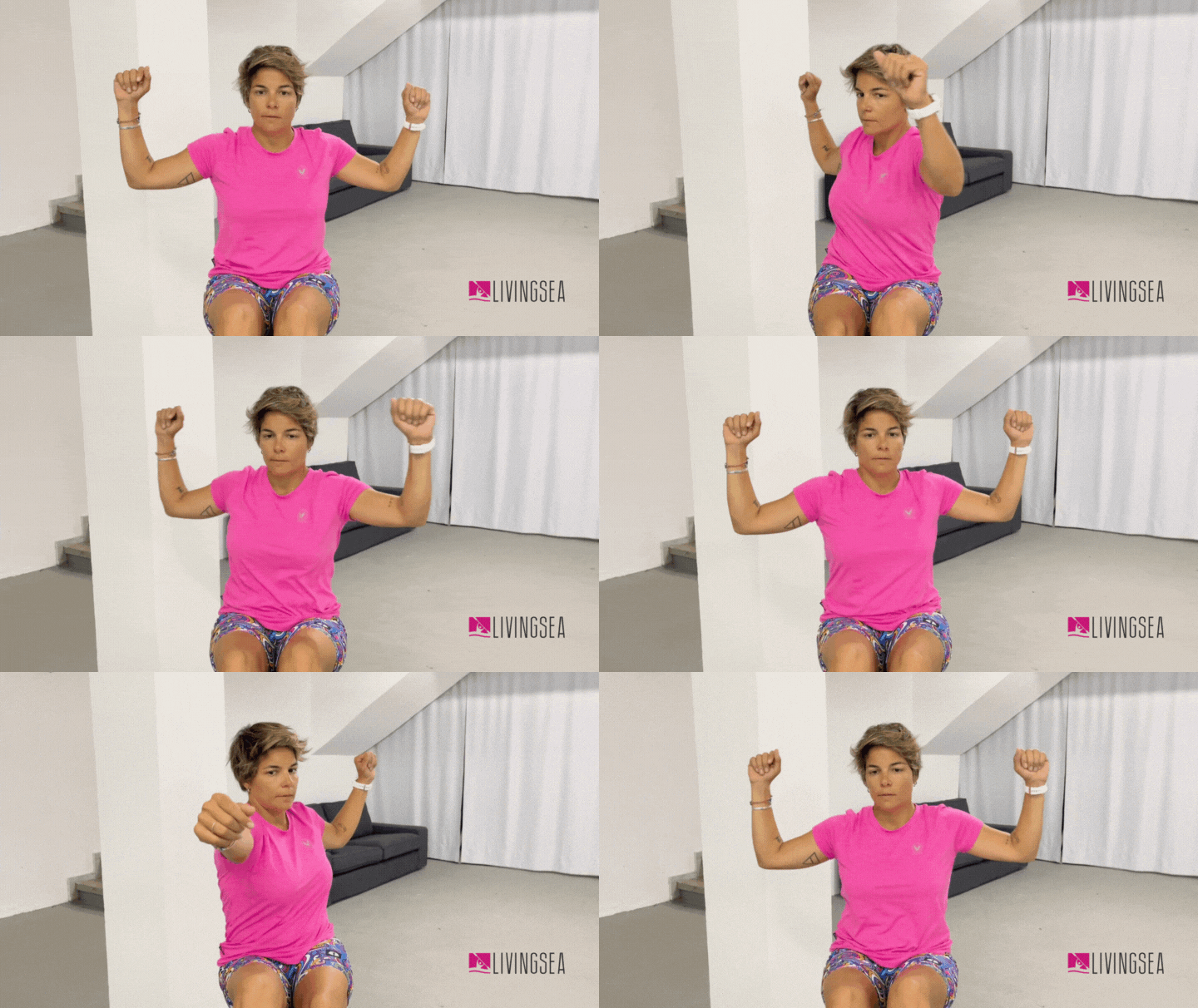
With an elastic band of medium resistance, project the chest slightly upward and raise the elbows well, closing the scapulas behind. 3×20 reps.
Exercise 2
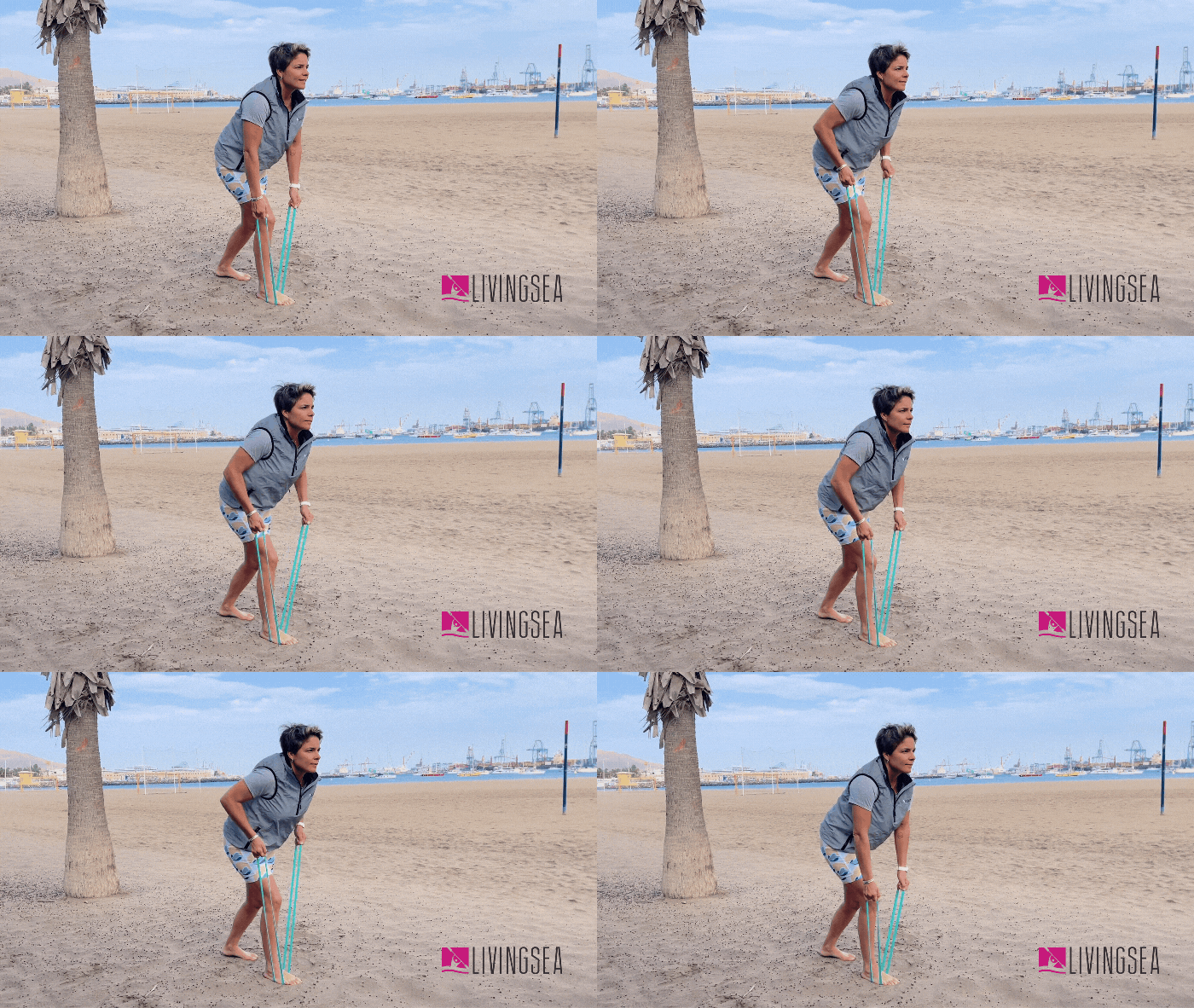
With the same band as the previous one, place the chest parallel to the ground and the arms semi-stretched. In this way, open the winds imitating the movement of a bird. 3×15 reps.
Exercise 3
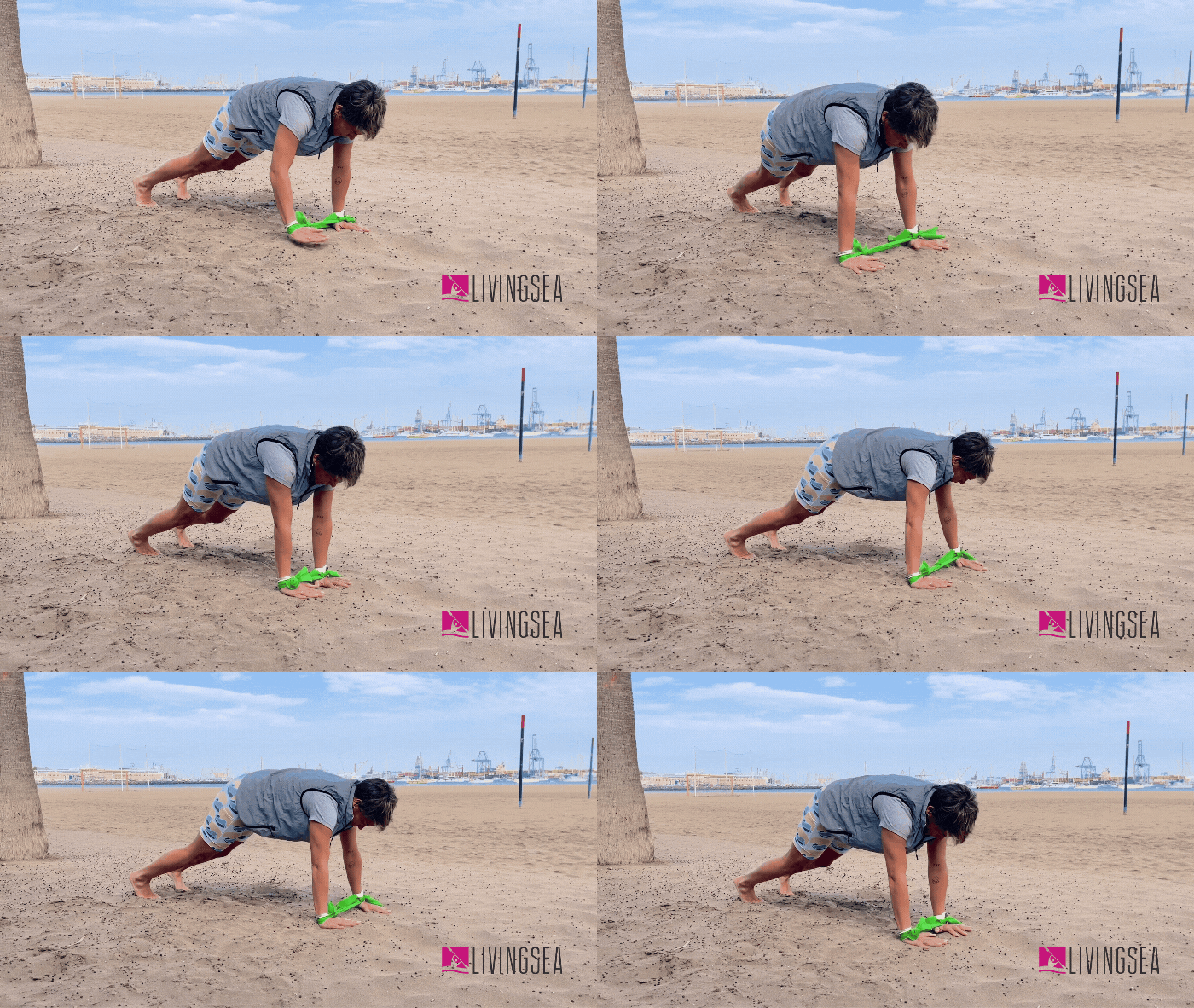
Place yourself in a plank position with your arms extended and an elastic band with some resistance on your wrists. In this position, try to make 2 or 3 steps to each side. Keep the plank as straight as possible, tucking the abdominal area inwards. 3×15 reps.
Exercise 4
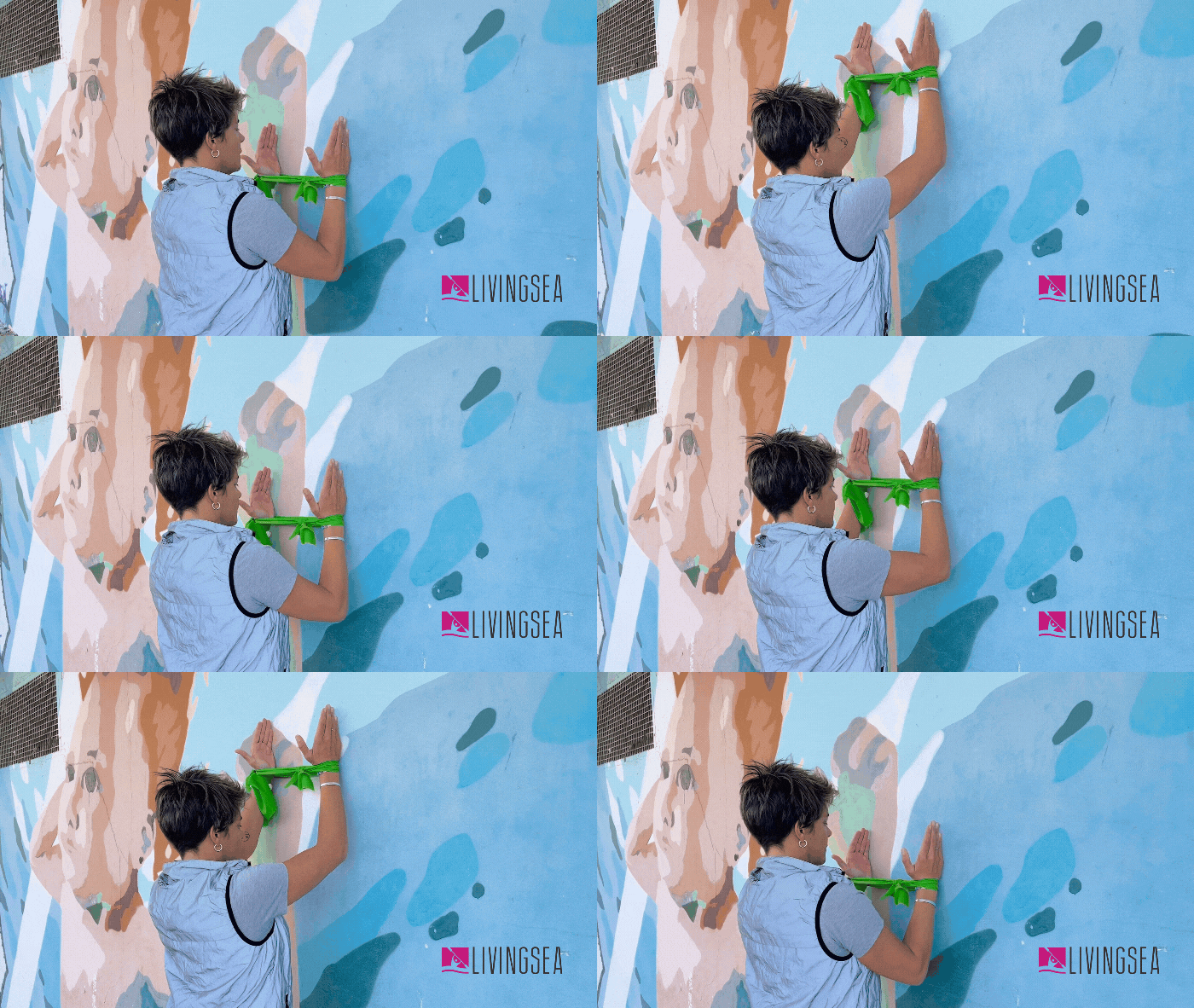
With the elastic on your wrists, apply continuous strength with the pinkies on the wall. There should always be tension on the elastic between both arms. 3×15 reps.
Exercise 5
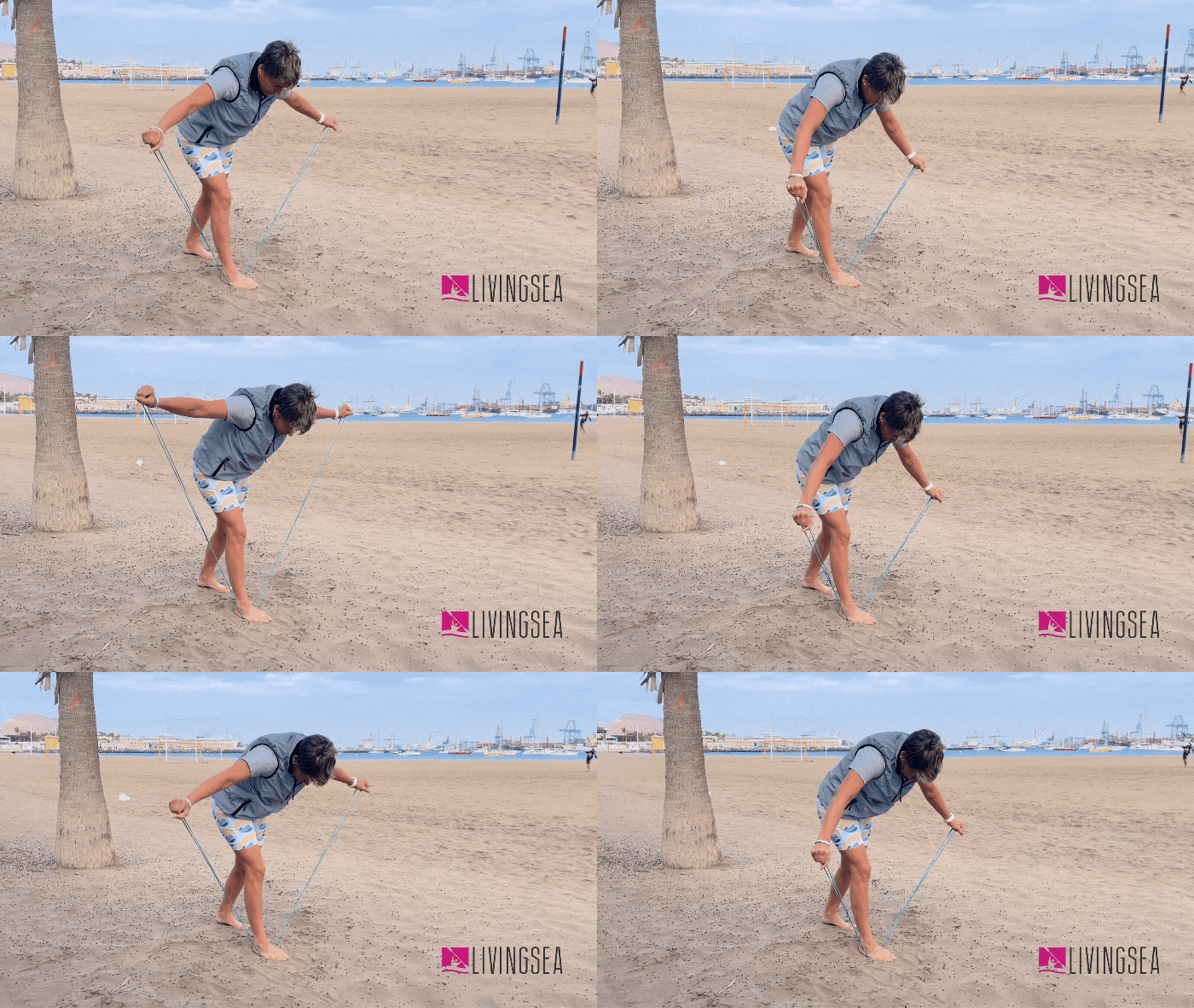
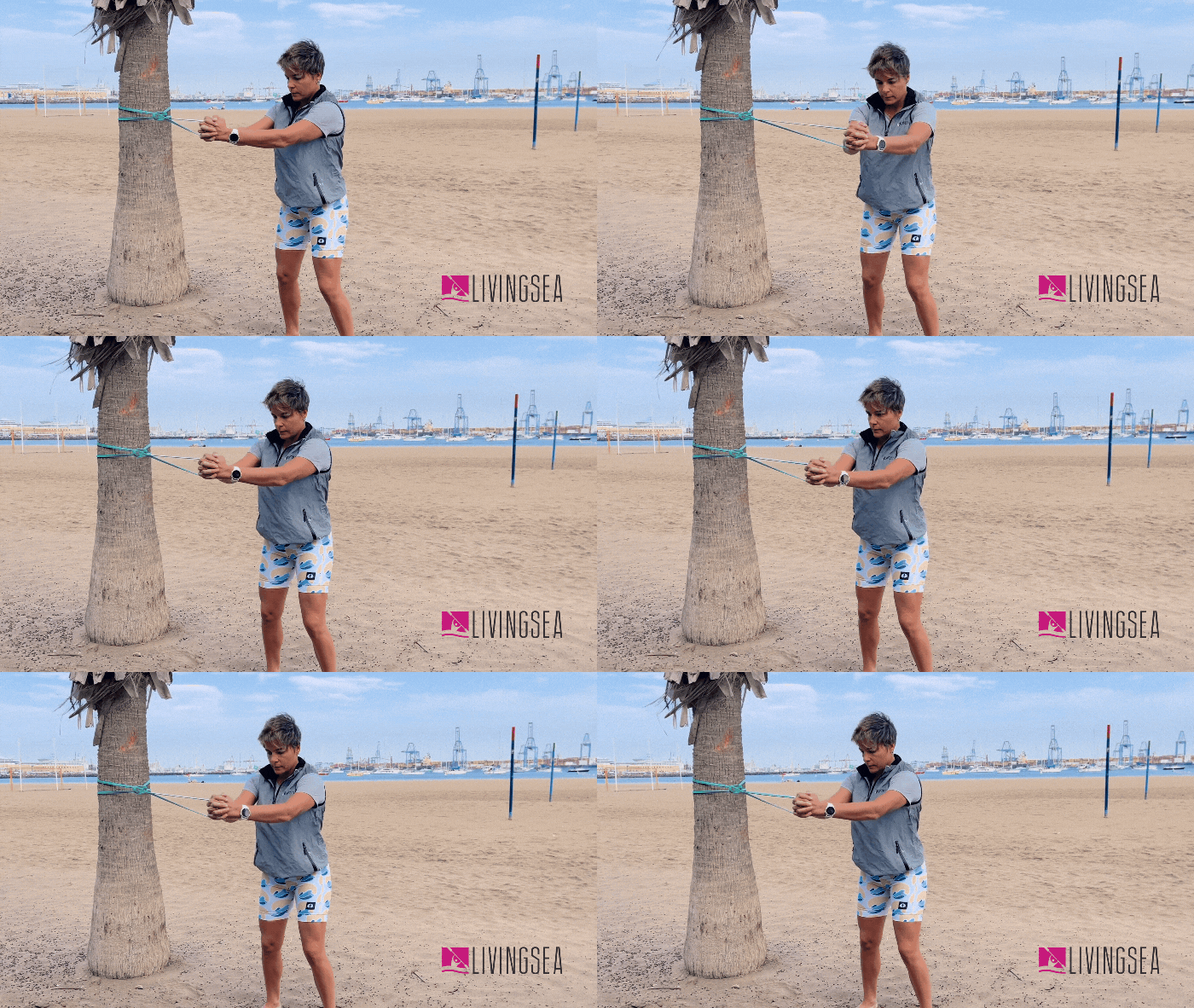
Hold the elastic band on a fixed surface, bend the knees and keep the arms semi-extended. Do not move your arms, let the torso twist. 3×20 reps each side.
Exercise 6 and 7
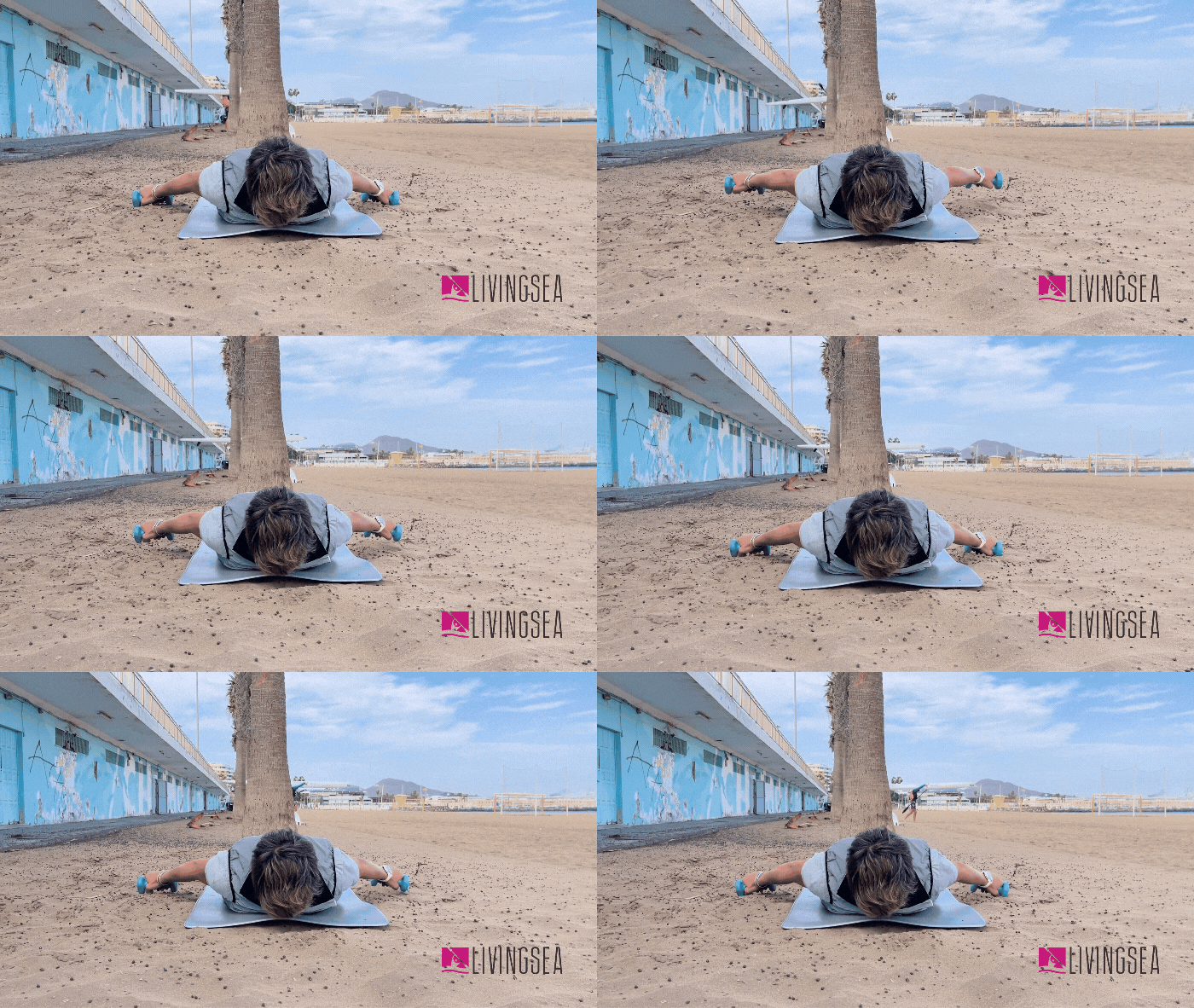
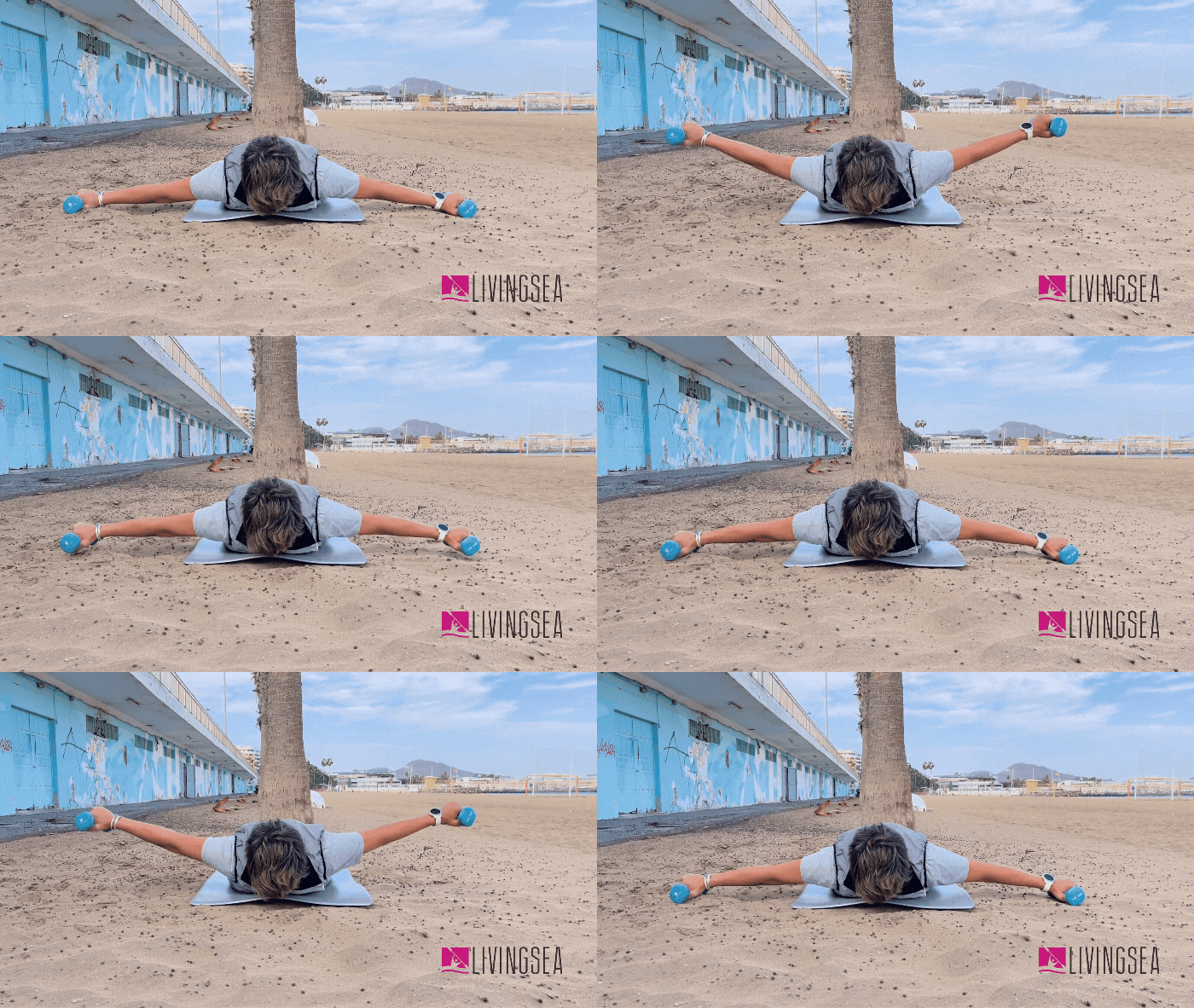
Lie on your stomach with a light weight dumbbell in each hand. Raise your arms (straight) for the lower trapezius. You can vary the opening angle and do sets in different positions. 3×15 reps.
Exercise 8
Put a medium resistance elastic band above your knees. Place your heels so that they align with the height of your butt. In that position, open and close your legs. You will notice the work on your glutes. 3×20 reps each side.
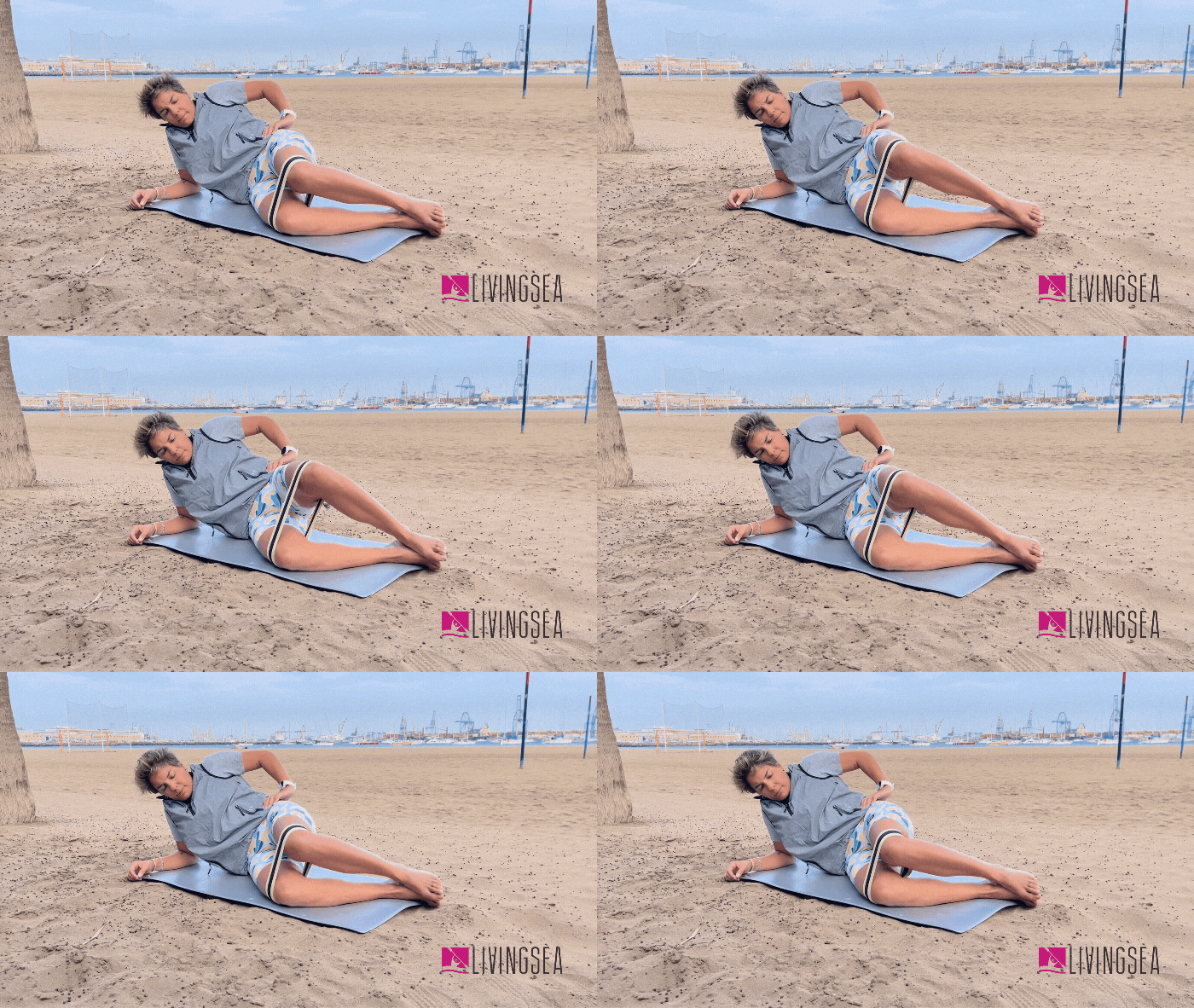
Exercise 9
You will need a ball or a fitball. Hold it between your knees and push as if you want to break it. Hold that position for 30 seconds.
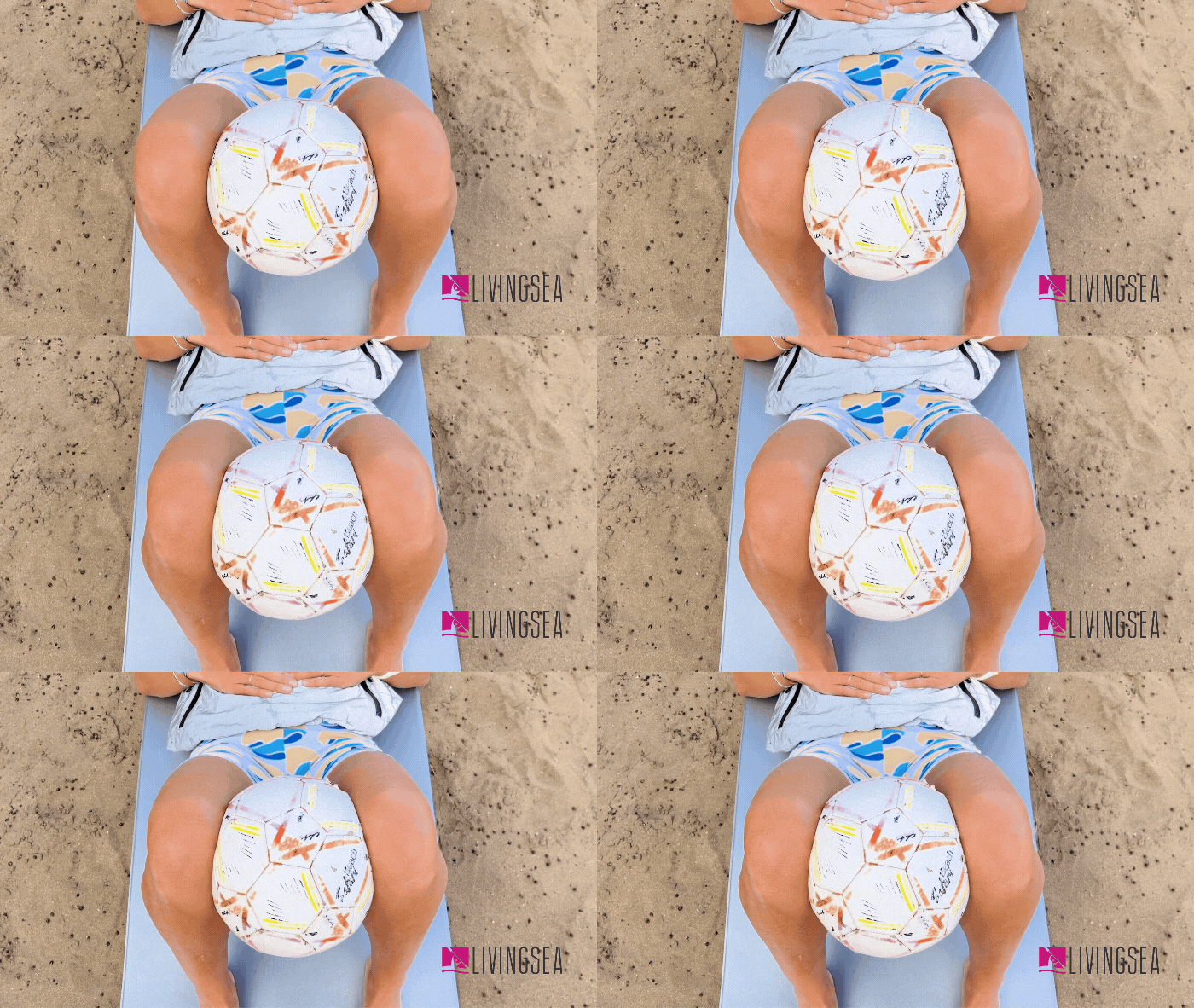
Exercise 10
Place an elastic band above your knees and lift your pelvis upward. Keep the tension on the elastic as you tuck your glutes inwards. Hold that position up for a few seconds. 3×20 reps.
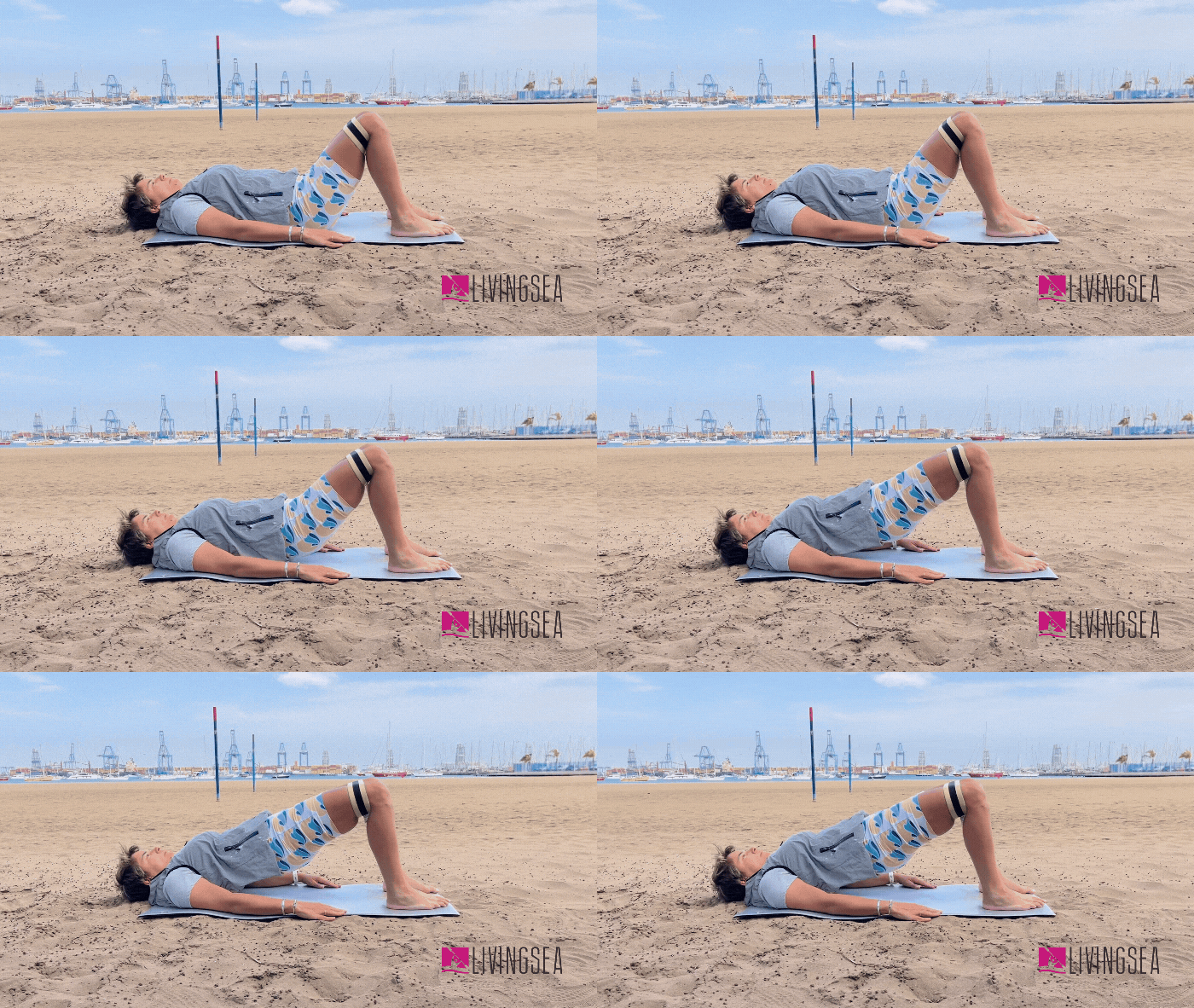
My recommendation is to make this table at least once a week, three sets of each exercise. Every three to four weeks you should change the exercises to keep making adaptations in your muscles.
Remember that to avoid injuries, it is also essential that you warm up well before the main part of the workout.
Also, at some point in the day, when the musculature is relaxed, you should work on flexibility so that the articulations have good range of motion and are not stiff.