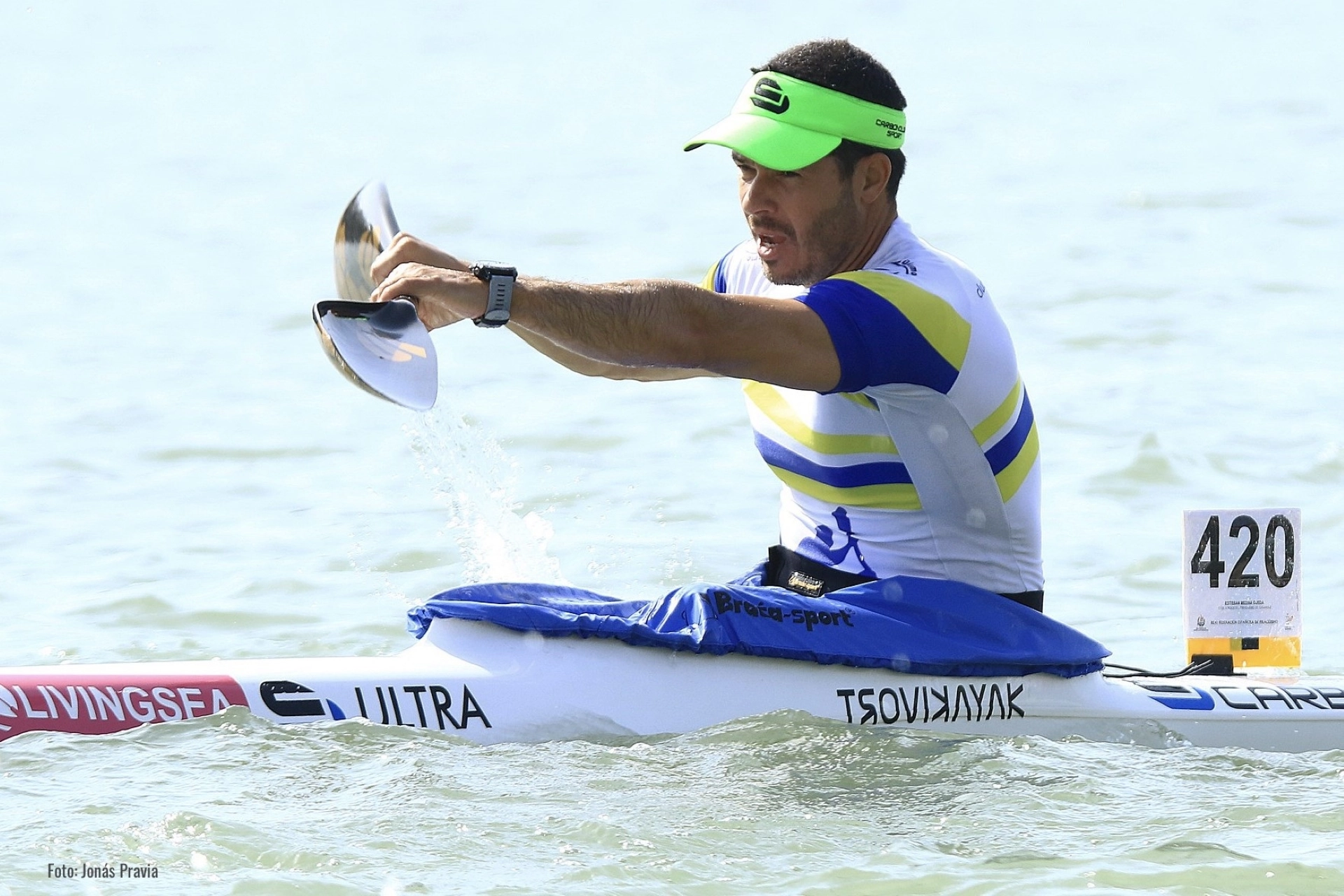
Common mistakes in paddling technique and tips for correcting them

Having a good and efficient paddling technique can help you not only to improve your performance, but also to reduce the risk of getting injured.

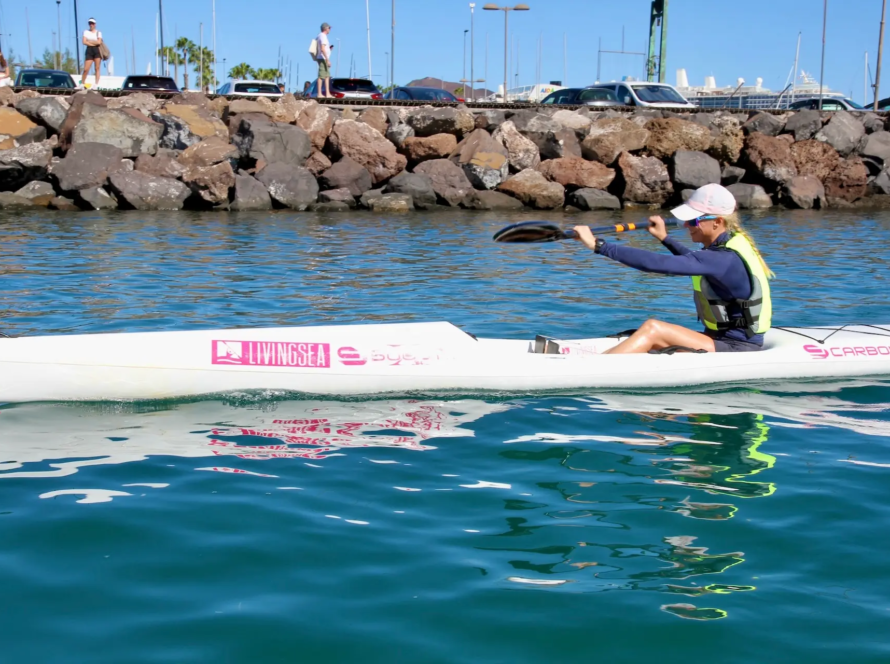
As you know, the paddling technique is divided in two phases: the aerial phase and the aquatic phase. Within each of them, there are some sub-phases.

In the aerial phase (when the blade is not in contact with the water) there is the rising of the blade sub-phase in the aerial strike. In the aquatic phase (when the blade enters the water), there are the sub-phases of aquatic strike, pulling and blade exit.

When we have been canoeing for some time, this movement becomes an automatic movement, so to modify any aspect of your paddling technique we will have to be fully aware of it. It is not always a good time to do it, so you should try to practice it at the beginning of the session, when you are not tired. If you do not get to correct them in the water, you will have to do it with some specific dry exercises to modify the movement pattern.

In this post, we will talk about the most common mistakes in the paddling technique that we have tried to identify in beginner, intermediate and elite paddlers, how you should correct them and some advice to work on them in the dry.

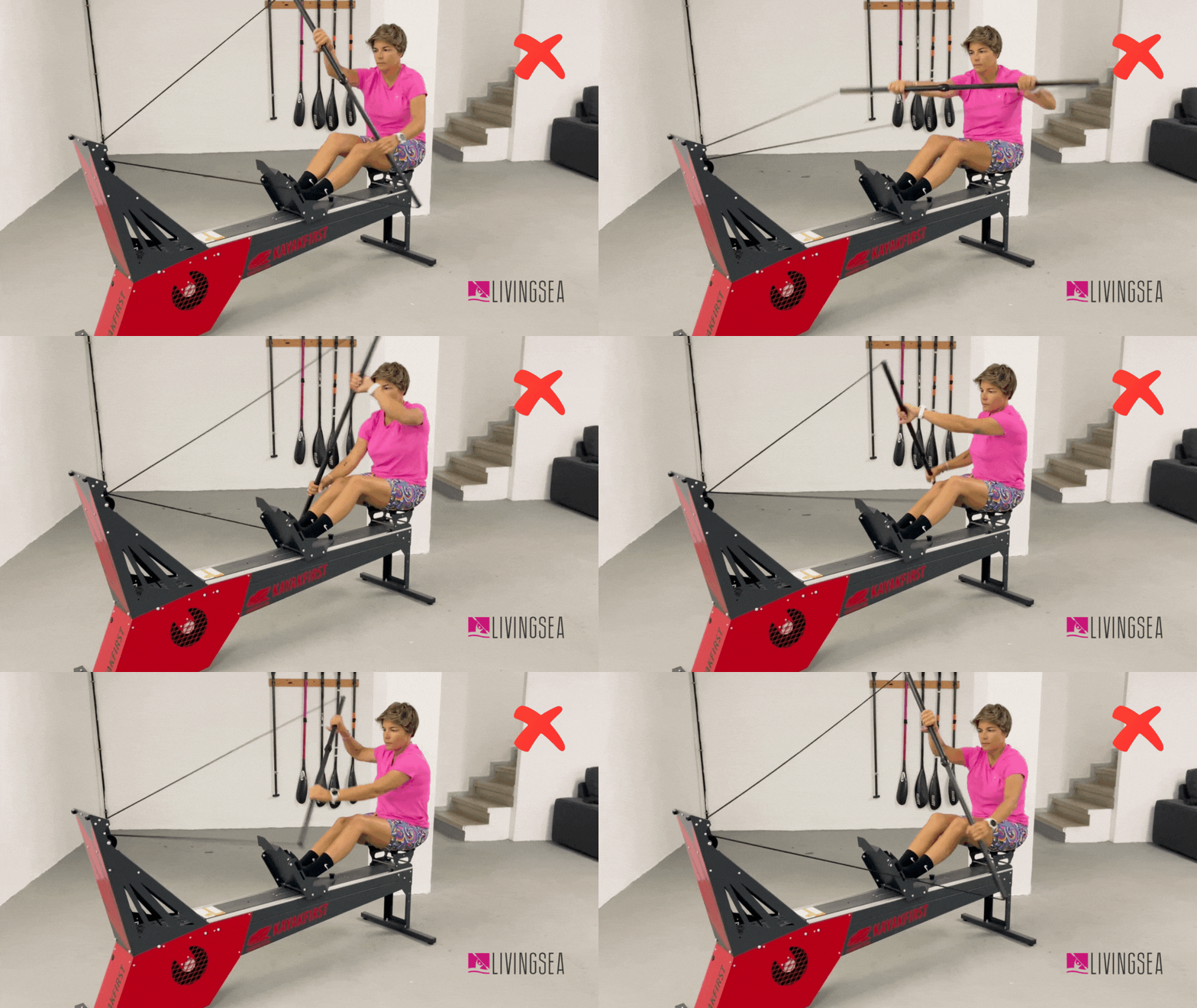
Mistake 1: Elbow above the wrist

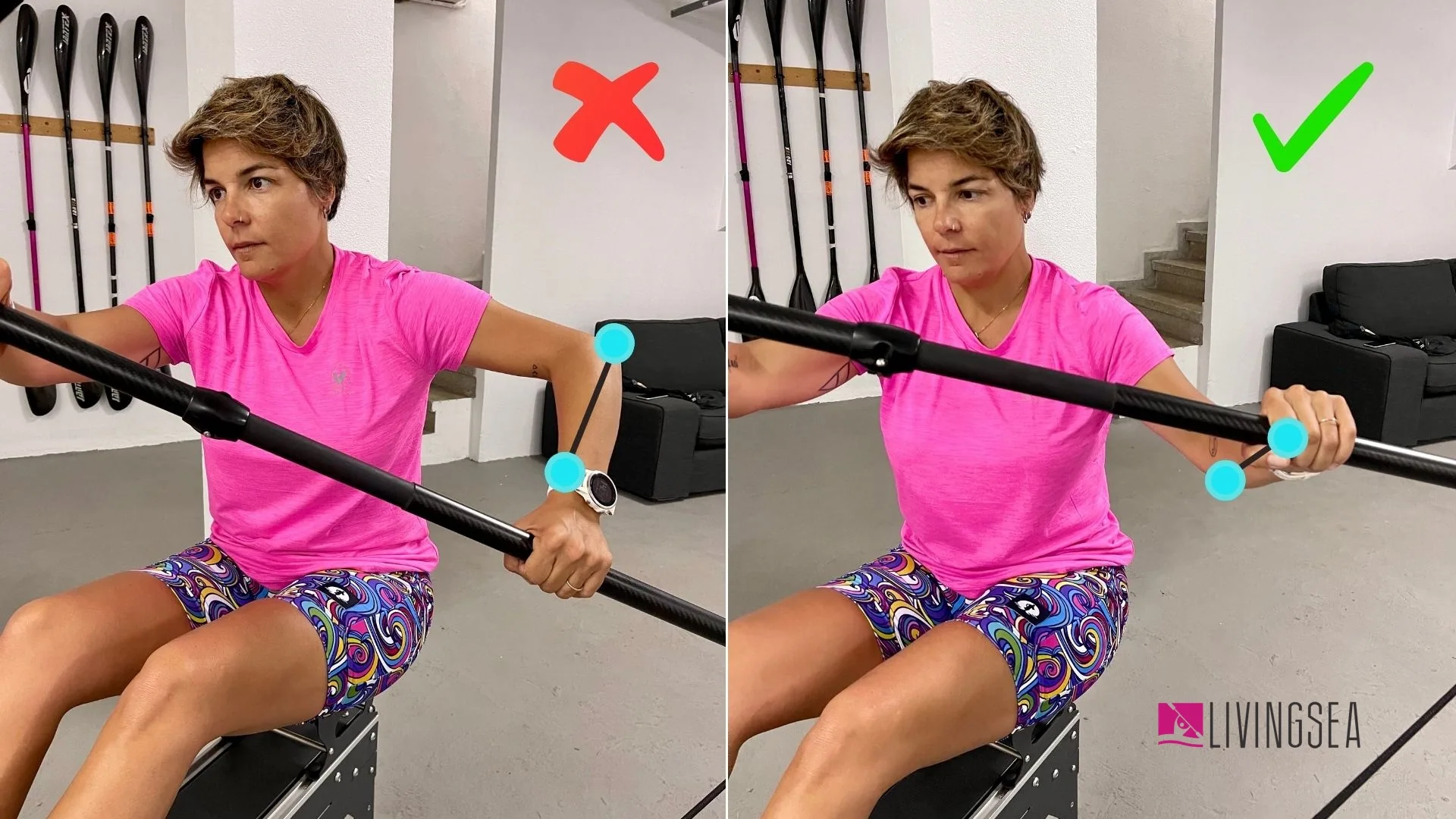
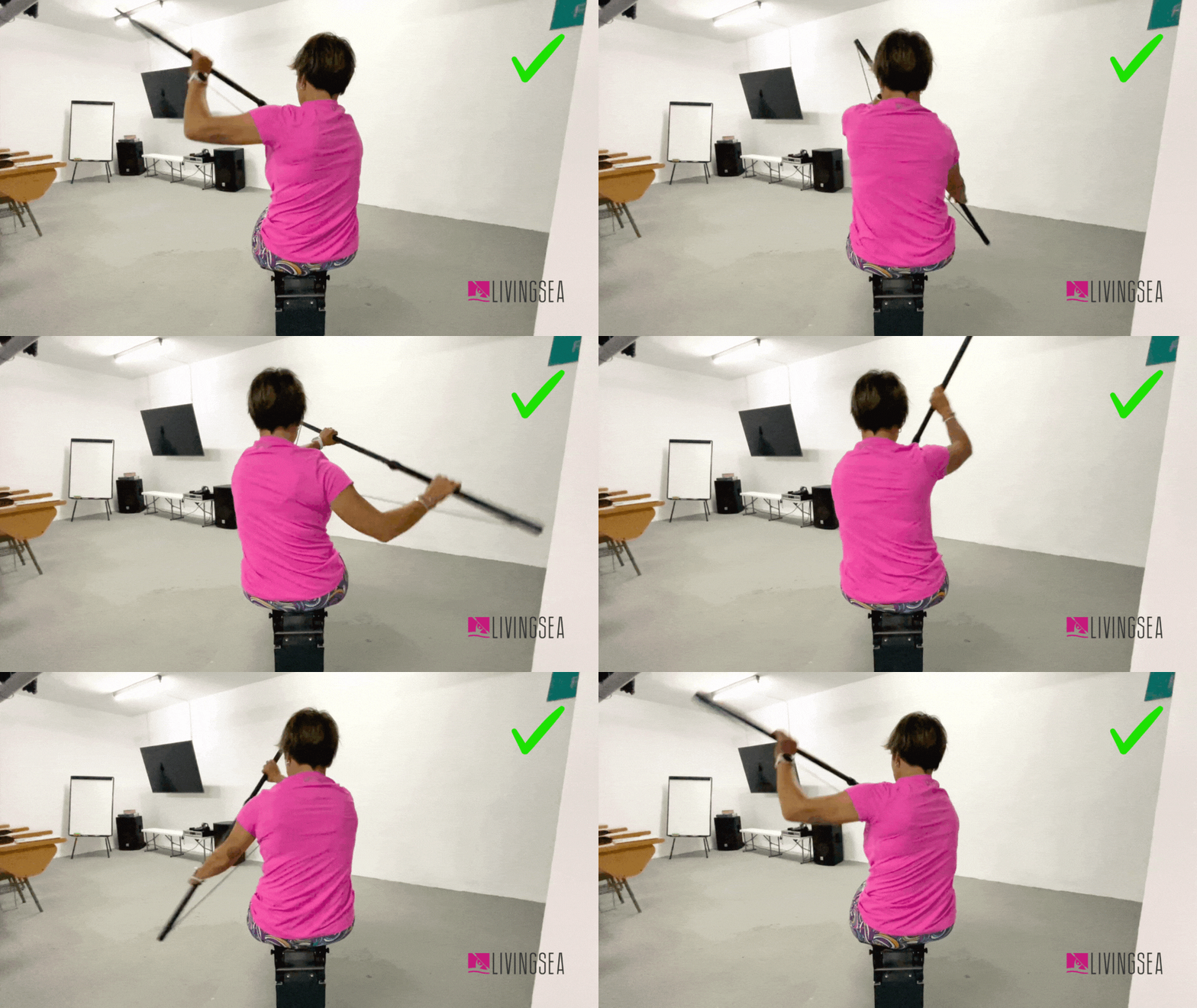
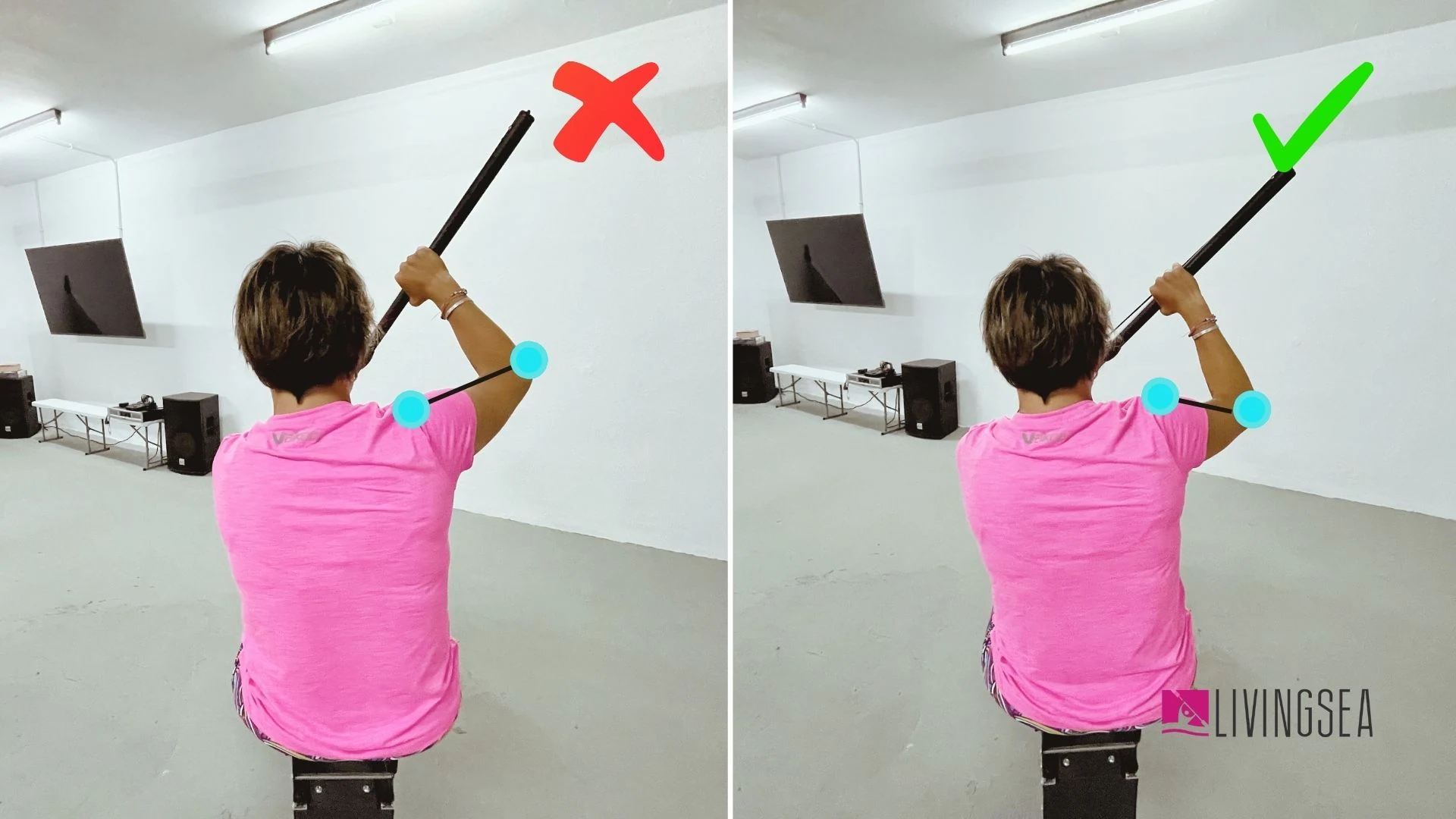
One of the common mistakes in the rising of the blade sub-phase is raising the blade with the elbow above the wrist. This will overload your shoulders and subsequently, in the aerial phase, you will not achieve a good stroke height. The right way is for the wrist to guide the stroke’s lift.

Mistake 2: No air strike

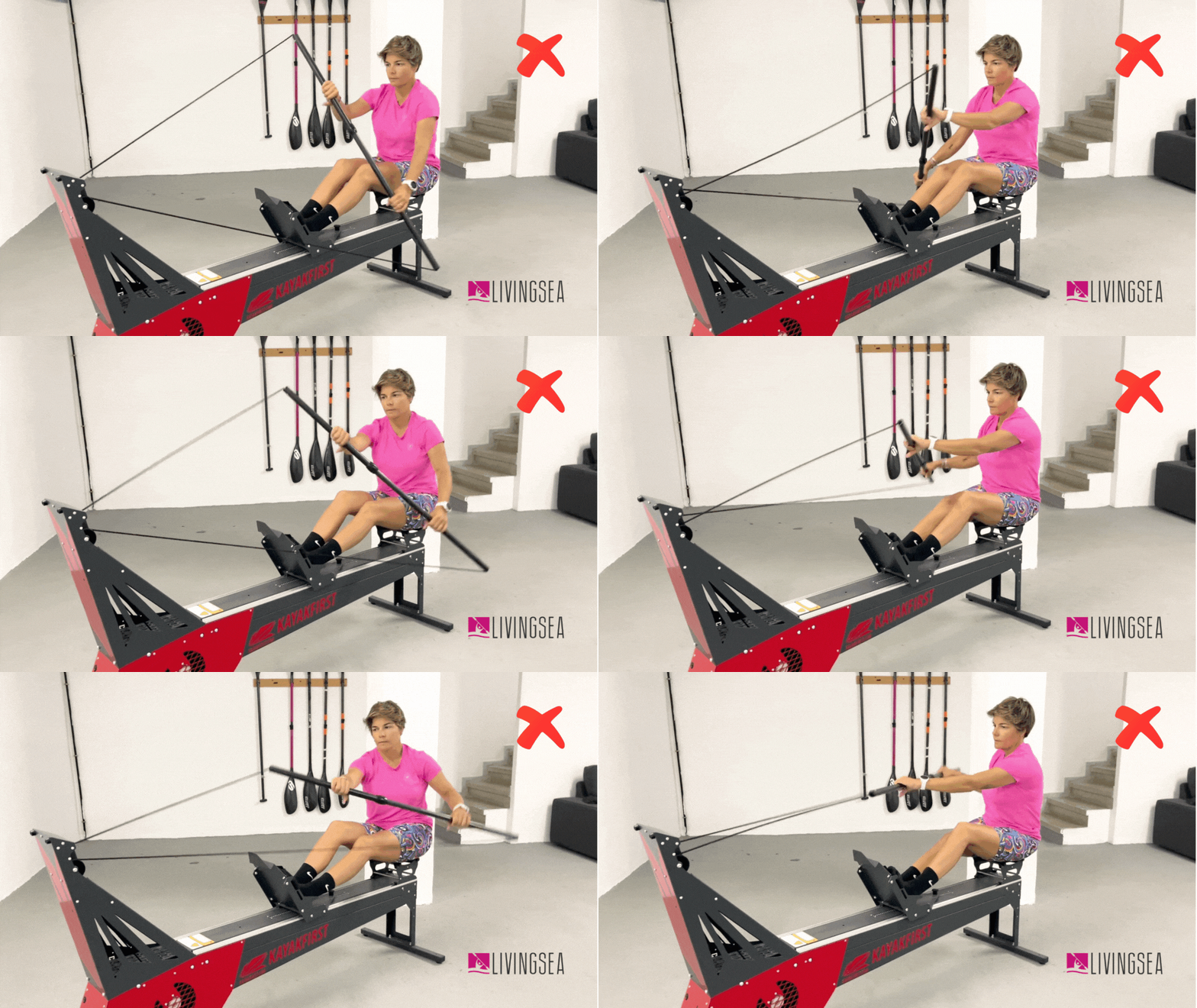
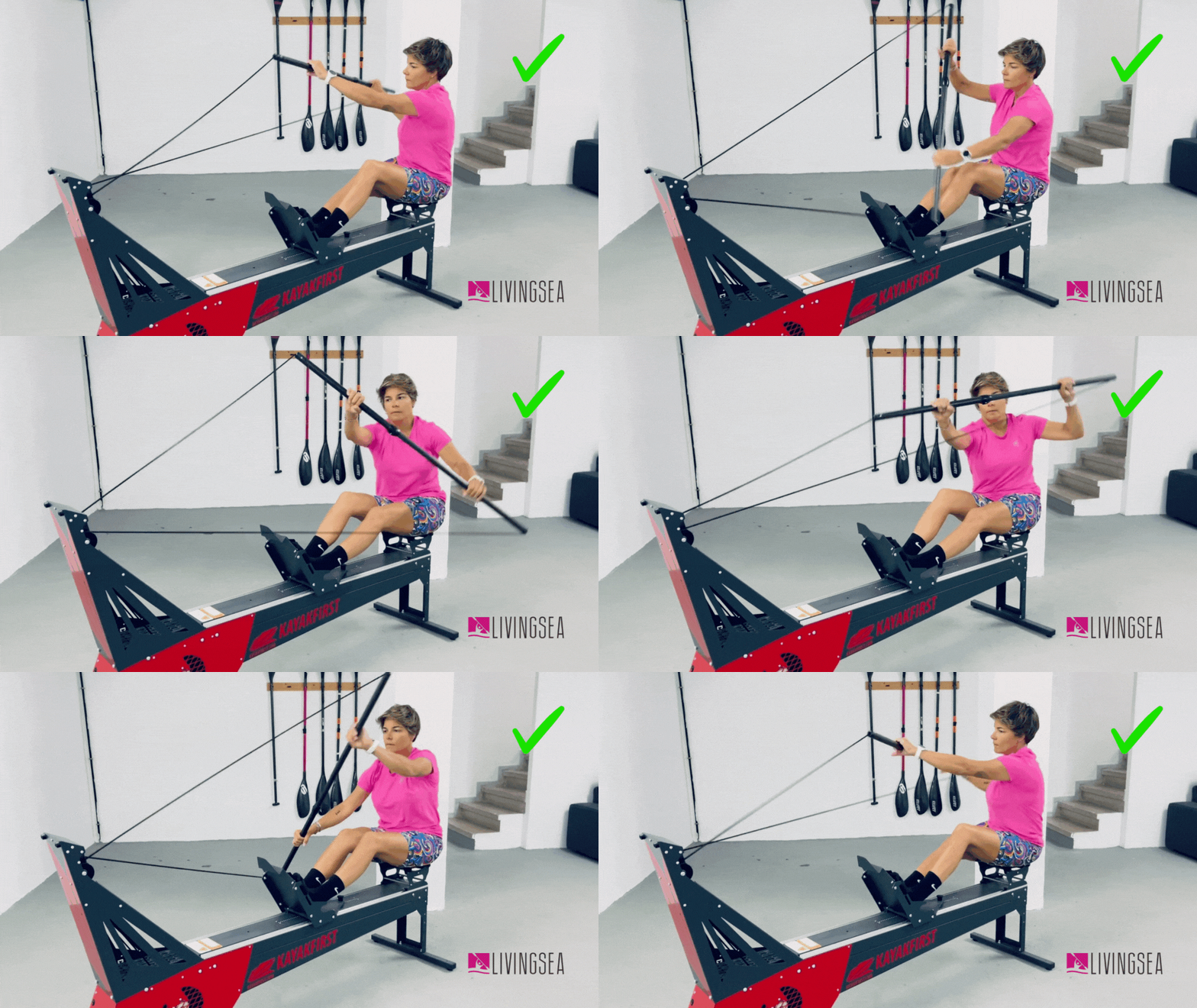
In the aerial strike, the most common mistake is either not performing it or keeping it too low. The right way would be to have a moment where the paddle is not touching the water, allowing the kayak to glide without interrupting the movement. You should bring your fist forward at eye level.

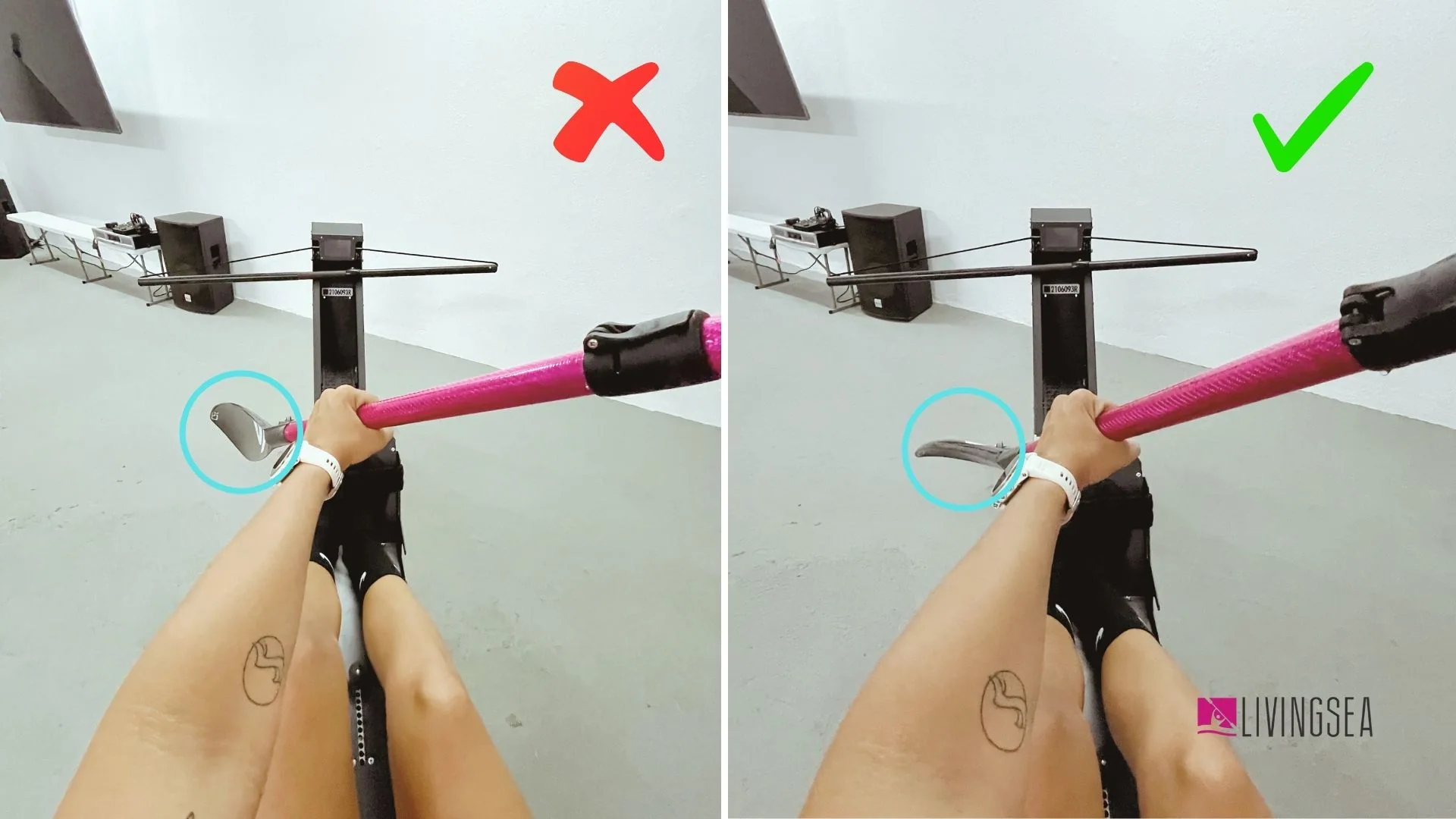
Mistake 3: Blade direction

Not placing the blade properly directed in the water is the main mistake we see when attacking in the water. We often see paddlers leaving the inner part of the blade facing outward, which causes it to not grip well the water so it does not fully use the entire surface to generate the momentum in the kayak. The right way would be for the blade to enter the water properly directed so it can grip and with a bit of inclination so that it does not splash.

Remember that for the blade to enter properly, the driving arm (the one above on the opposite side of the blade you are putting in the water) should assist in that blade entry. The upper elbow helps a little downwards to put the blade in.

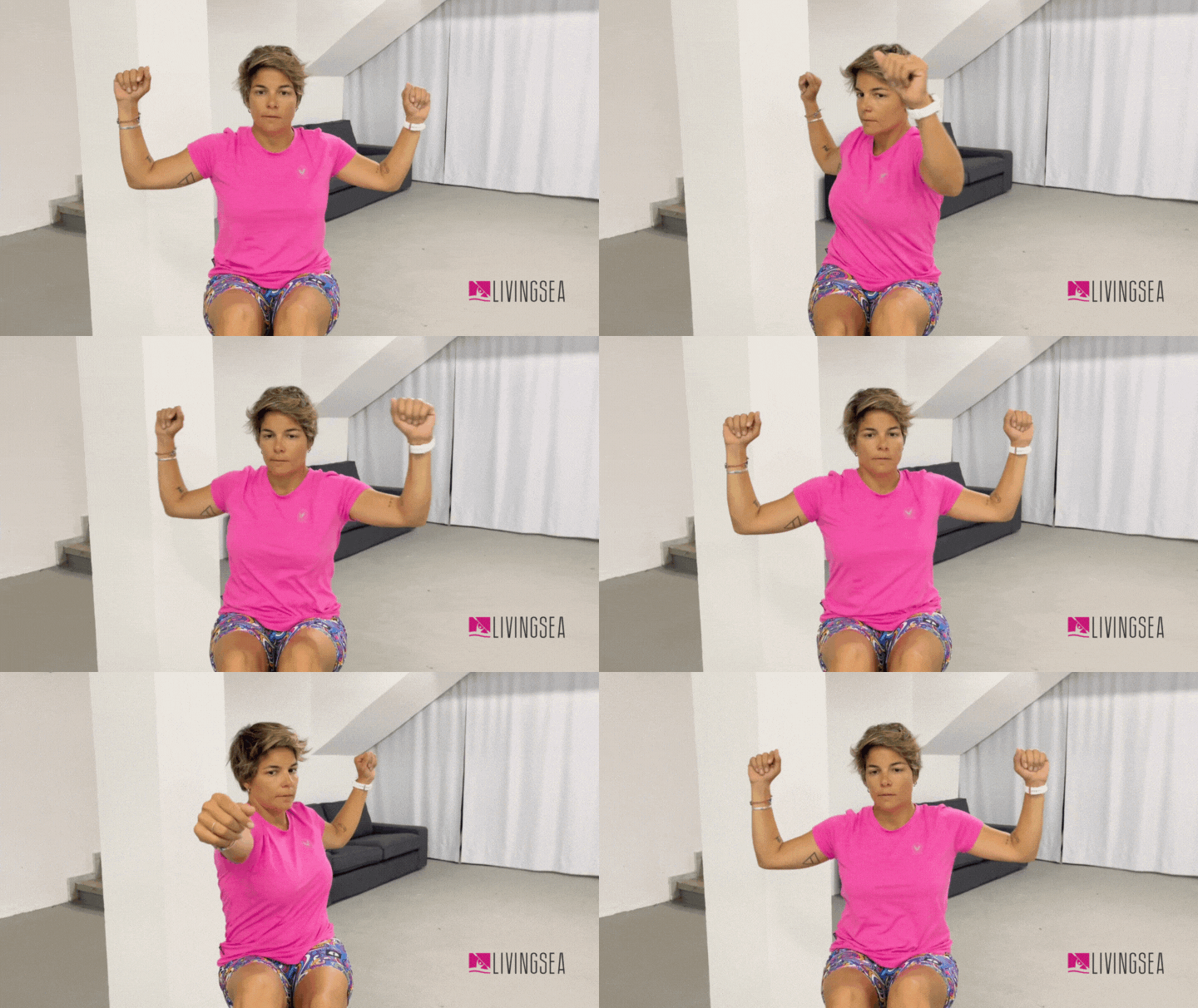
Mistake 4: STH line

As you know, the pulling phase is the most important because it is the substantial one, where we generate the most momentum in the kayak

There are many things we could explain about this phase, but I will focus on the one that I consider to be the most repeated: not working as a block.

It is very common to see paddlers who start canoeing as adults who do a shoulder twist only, without connecting that block work (shoulder, trunk, hip). These three elements must work in unison so that the force is transmitted from the blade to what is in contact with the kayak, which are the feet and the glutes through torsion and hip work.

To correct it, you will need to work in block, so that the upper arm’s locking with the shoulder-trunk-hip line torsion in unison in a coordinated movement.

An exercise that works well to coordinate this movement is to stand in front of a mirror and coordinate the movement. First generate trunk rotation, where the arm follows without moving forward, to finally extend it. Some paddlers tend to extend the arm before the torsion is completed, causing the paddle to move only with the arms movement and not with the torsion, which is what we are aiming for.

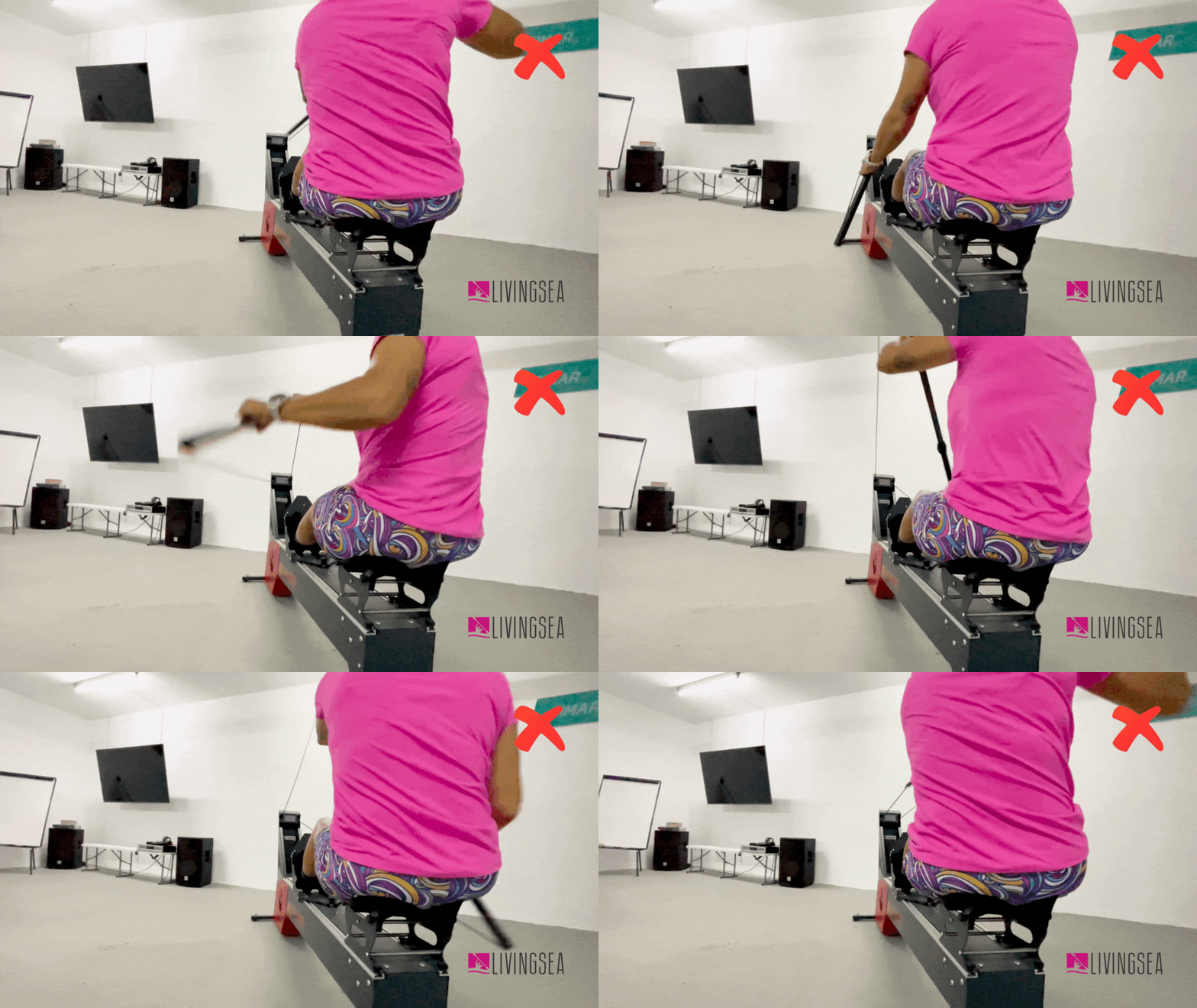
Mistake 5: Not separating the paddle

The most common mistake in the paddle exit is keeping it too close to the kayak or the body. The paddle exit should be done by separating it far from the body and the kayak, as if it were the wing of a bird unfolding.

We should also avoid pulling it out behind the hip, because delaying the paddle’s exit will make the boat slow down. It should rather be an advanced exit. At about mid thigh, we should be thinking about lifting the blade.

What we coaches in Gran Canaria do to correct this is to place a mop handle horizontally right where the cockpit ends or on the paddler’s back. In this way, the paddler will be forced to open the paddle if he does not want to hit the mop stick.

Mistake 6: Elbows up

Lifting the elbow of the pusher arm (the one that goes over the top once you take the paddle out of the water) above the shoulder is another of the most common mistakes.

Elbows should never go above the shoulder. You should keep them at the same height or below the shoulder to avoid overloading the muscles and to help the blade that is in the water enter. If we raise the elbow, what we will cause is to move the blade away from the water.

Working on your paddling technique starts with being aware of your posture and your mistakes. If you have the opportunity, record yourself in a training session and try to detect your failures in each phase. Do you need help? Do you want us to give you feedback on your paddling technique? Tag us in your paddling video and we will give you some tips to improve it.

Share the post:

Suscribe to our Newsletter

Official distributor of the best surfski brands

Come and paddle with Livingsea

Livingsea is the meeting point for paddlers from around the world that offers you everything you need for surfski paddling.

 Monday to Friday
  From 10:00 to 15:00
  info@livingsea.es
  +34 691 597 021

Close